Reptilians
The Draconians
The Shape-Shifting Hypothesis
“The reptilians are not from another planet. They are here. They have always been here. They operate behind the faces we trust the most.”
— David Icke, The Biggest Secret, 1999In 1999, former BBC sports presenter David Icke published The Biggest Secret, a sprawling work that wove together ancient mythology, modern conspiracy theory, and eyewitness testimony into a single, staggering claim: that a race of shape-shifting reptilian beings from the Alpha Draconis star system has controlled human civilization for millennia. According to Icke, these beings can assume human form and have positioned themselves in the highest echelons of political, financial, and royal power. The book was ridiculed, of course. But it sold millions of copies and struck a nerve that has never quite stopped vibrating.
What makes the shape-shifting hypothesis so difficult to dismiss entirely is not Icke’s modern framework but rather the sheer weight of historical precedent it draws upon. Every major ancient civilization — without exception — has mythological traditions involving serpent beings who walk among humans, teach forbidden knowledge, or rule from the shadows. That is a pattern worth noticing, regardless of what you think about modern conspiracy theories.
Underground Operations: The Dulce Base
“Level six is privately called ‘Nightmare Hall.’ It holds the genetic labs. I have seen multi-legged humans that looked half-human, half-octopus. Also reptilian-humanoids, and furry creatures that had hands like humans and cried like babies.”
— Thomas Castello, alleged former Dulce Base security officerBeneath the arid mesas of Dulce, New Mexico, there allegedly exists a vast, multi-level underground facility jointly operated by the U.S. military and extraterrestrial beings — primarily Reptilians. The testimony of Thomas Castello, who claimed to have worked at the base as a security technician, describes a seven-level complex where the lower levels house genetic experimentation labs and Reptilian living quarters. His account, which first circulated in the late 1980s, has never been verified. The base has never been found. But Castello’s descriptions align with an older tradition of encounter reports describing reptilian beings emerging from underground caverns, tunnel systems, and cave networks stretching back to Native American oral histories.
The Hopi speak of the “Ant People” who sheltered them underground during world-ending catastrophes. The Zuni describe “Lizard People” beneath the Earth. In 1934, mining engineer G. Warren Shufelt claimed to have located a network of tunnels beneath downtown Los Angeles, built by a “Lizard People” civilization 5,000 years ago. He had maps. He had city permits. The dig was abandoned before reaching the tunnels. The question is not whether the Dulce Base exists — it is why the idea of intelligent reptilian beings living underground resonates across so many independent cultures and centuries.
The Serpent Gods of Antiquity
“The Nagas were a race of serpent beings. They were said to live in underground cities. They were wise, dangerous, and deeply connected to the fate of humanity.”
— Hindu Vedic tradition, summarized from the MahabharataBefore David Icke, before Dulce, before the modern UFO era, serpent beings ruled the mythological landscape of Earth. The Nagas of Hindu tradition are shape-shifting serpent deities who dwell in elaborate underground kingdoms and possess advanced knowledge. The Aztec feathered serpent Quetzalcoatl was a civilization-bringer who descended from the sky. The Chinese dragon — benevolent but terrifying — is the foundation of an entire imperial cosmology. The Egyptian god Sobek bore a crocodilian form. The serpent in Genesis possessed knowledge that God had withheld from humanity.
The sheer universality of the serpent archetype is staggering. These are not cultures that had contact with one another. The Aztecs and the Hindus did not share notes. The Sumerian accounts of the serpent god Ningishzida predate Greek mythology by two millennia. And yet, across all of them, the same figure appears: a reptilian intelligence, older than humanity, associated with hidden knowledge, underground realms, and the manipulation of human destiny. Coincidence explains a lot of things. It does not comfortably explain this.
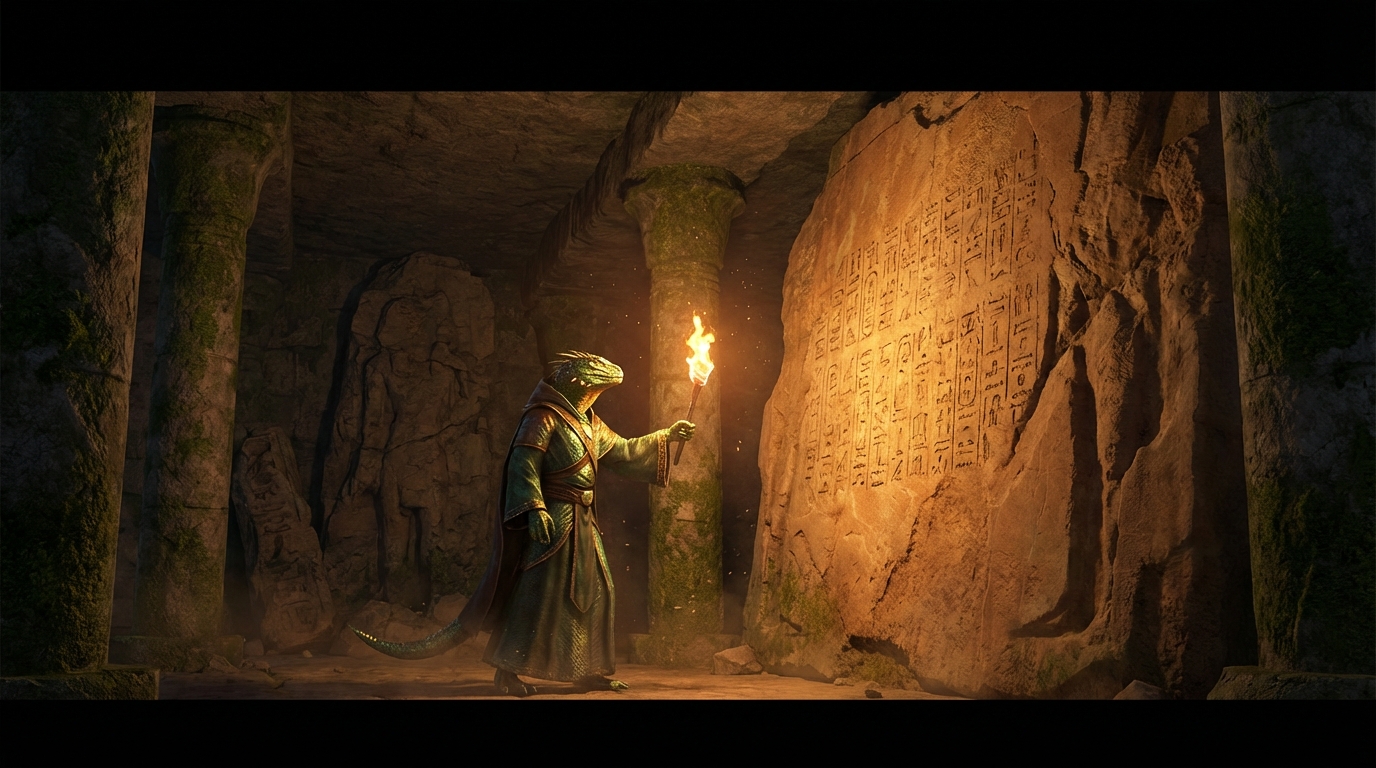
Of all the alleged alien species in the modern taxonomy of the strange, the Reptilians provoke the strongest reactions. They are the villains of the narrative — the Draconians, as some researchers call them, referencing their supposed home star system of Alpha Draconis. In this framework, they are a hierarchical, warrior species organized into castes: the common soldiers and workers standing seven to eight feet tall, with green or brown scaled skin, vertical-slit pupils, and powerful tails; and above them, the royal caste known as the Ciakars — albino-white, winged, standing fourteen to twenty-two feet tall, said to be among the oldest sentient species in the galaxy.
The Reptilian narrative is easy to ridicule and difficult to entirely dismiss. Not because of any single piece of evidence — there is no Grey-style body of abduction research, no star map, no Roswell analogue. But because the pattern is so deep and so wide that it predates every other alien narrative by thousands of years. When the first Sumerian scribes pressed reed styluses into wet clay tablets five thousand years ago, among the first stories they wrote down were accounts of serpent beings who came from elsewhere and shaped human civilization. The oldest writing we possess already contains this idea.
The modern Reptilian conspiracy theory — with its allegations of shape-shifting world leaders and underground bases — is, depending on your perspective, either a contemporary translation of this ancient pattern or a dangerous fantasy that grafts real anxieties about power onto imaginary monsters. What is genuinely interesting is that the theory gained traction not through physical evidence but through the sheer resonance of the archetype. Something about the idea of cold-blooded, calculating intelligence hiding behind warm-blooded faces touches a nerve that feels almost instinctive — as if the fear is older than the theory.
Whether the serpent gods of every major civilization represent ancestral memory of an actual reptilian species, a Jungian archetype embedded in the structure of human consciousness, or simply the natural human tendency to project intelligence onto the most alien-looking creatures we share the planet with, the pattern itself is real. It is carved into temple walls in Angkor Wat. It coils around the caduceus of Hermes. It whispers from the pages of Genesis. Whatever the Reptilians are — literal beings, symbolic projections, or something in between — humanity has been telling stories about them for as long as humanity has been telling stories at all.
Further Reading
- David Icke, The Biggest Secret (1999)
- The Dulce Base conspiracy & Thomas Castello testimony
- Serpent gods across cultures: Nagas, Quetzalcoatl, Sobek
- John Rhodes, Dragons of the Apocalypse