Fingerprints of the Gods
Graham Hancock and the Lost Mother Culture
The Question Nobody Could Answer
“I am not arguing that our ancestors were visited by aliens. I am arguing that a civilization of human beings, as smart as us, existed during the Ice Age — and was destroyed. The survivors became the civilizers remembered in myth all around the world.”
— Graham Hancock, Fingerprints of the Gods, 1995In 1995, British journalist Graham Hancock published Fingerprints of the Gods, a book that would sell approximately five million copies, be translated into 27 languages, and ignite a debate that has only intensified in the three decades since. The core thesis is deceptively simple: what if an advanced human civilization existed before the end of the last Ice Age, was largely destroyed by the cataclysm of the Younger Dryas around 12,000 years ago, and its survivors scattered across the globe to restart human culture? It is not a claim about aliens. It is a claim about us — about what humans may have achieved, and lost, and forgotten.
The Civilizers Who Came from the Sea
“In Egypt they remembered Osiris and Thoth, who came after the great flood to teach agriculture, writing, and astronomy. In Mexico it was Quetzalcoatl, the feathered serpent, who arrived by sea. In Peru, Viracocha — a tall, bearded figure who appeared after the waters receded. Every culture remembers the same story. Why?”
— Graham Hancock, Fingerprints of the Gods, 1995Hancock’s most compelling observation is not a single piece of evidence but a pattern — one that spans continents, cultures, and millennia. Ancient Egypt preserved memories of Zep Tepi, the “First Time,” when godlike beings arrived to establish civilization after a great catastrophe. The Maya and Aztec traditions speak of Quetzalcoatl, a bringer of knowledge who came from across the sea. The Inca remembered Viracocha, who emerged from the waters of Lake Titicaca to teach the arts of civilization. Sumerian texts describe the Apkallu — seven sages who rose from the sea to give humanity the foundations of culture. India preserves the myth of Manu, who survived a great flood and restarted human civilization. These are not vaguely similar stories. They share specific structural elements: a catastrophic flood, survivors who arrive from elsewhere, the deliberate transmission of knowledge — agriculture, astronomy, architecture, writing — to populations starting over from nothing.
The Geological Complement: Randall Carlson
“Graham provides the mythological and archaeological framework. I provide the geological evidence. Together, the picture that emerges is of a cataclysm at the end of the Ice Age that was far more devastating than mainstream science has acknowledged — and far more recent than most people realize.”
— Randall Carlson, Joe Rogan Experience interviews, 2014–2023Hancock’s work found a powerful complement in geologist Randall Carlson, whose decades of fieldwork documenting the physical evidence of Younger Dryas catastrophism provided the geological foundation that Hancock’s mythological and archaeological arguments needed. Their joint appearances on Joe Rogan’s podcast — reaching audiences of tens of millions — brought the lost civilization hypothesis out of the fringe and into mainstream conversation. In 2022, Hancock’s Netflix series Ancient Apocalypse became one of the platform’s most-watched documentaries, prompting formal responses from the Society for American Archaeology — an extraordinary acknowledgment of how seriously the establishment now takes the challenge.
The academic response to Hancock has been, characteristically, dismissive — and that dismissiveness has become part of the story. Archaeologists have called his work pseudoarchaeology. The Society for American Archaeology wrote to Netflix urging them to reclassify Ancient Apocalypse as science fiction. And yet the evidence Hancock points to is not fabricated. Göbekli Tepe is real. The Younger Dryas impact evidence is real. The flood myths are real. The question is not whether these data points exist but what they mean when placed together — and whether the orthodox narrative of human history has room to accommodate them.
Hancock’s critics argue that the similarities between flood myths can be explained by the universal human experience of living near rivers that flood, and that the “civilizer” archetype is a common mythological motif with no necessary historical basis. These are reasonable objections. But they do not fully account for the specificity of the parallels — the consistent emphasis on knowledge transmission, the maritime arrival, the post-catastrophe timing, the astronomical sophistication embedded in structures from the Giza plateau to Angkor Wat to the temples of the Maya.
What makes Hancock’s thesis genuinely difficult to dismiss is the accumulation of anomalies. Each one alone can be explained away. Göbekli Tepe is an outlier. The Younger Dryas was just climate variability. Flood myths are universal but meaningless. Astronomical alignments in ancient architecture are coincidence. But taken together, the anomalies form a pattern — and patterns, in science and in journalism, demand explanation. The orthodox response has been to explain each anomaly individually while refusing to consider the pattern they collectively form.
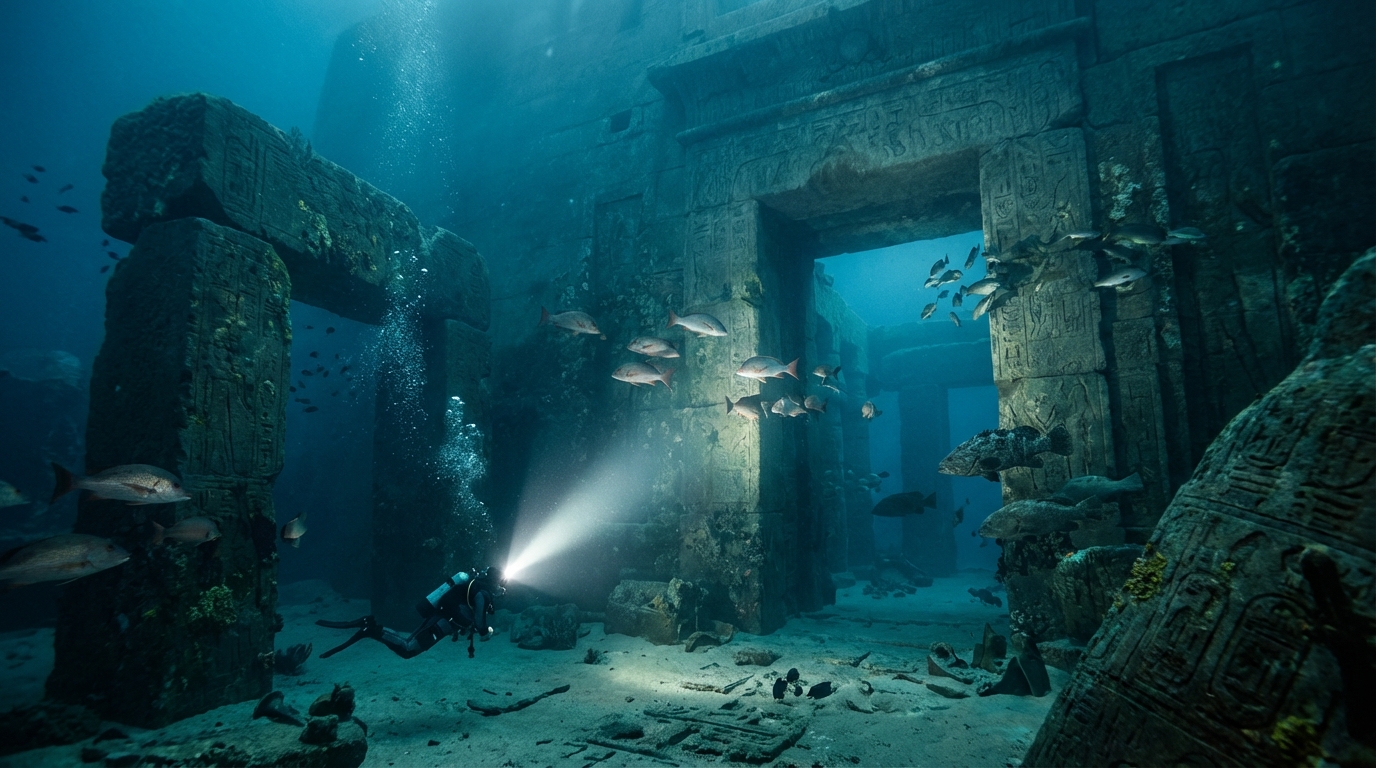
Perhaps the most important contribution of Hancock’s work is not any specific claim but the question it forces: how much of human history have we lost? Sea levels have risen roughly 120 meters since the Last Glacial Maximum. Every coastal civilization from that era is underwater. We are examining the archaeological record of a planet whose coastlines have been redrawn — and assuming that what we find inland represents the full story. That assumption deserves more scrutiny than it has received.
Hancock may be wrong about the details. He may be right. But the question he asks — whether human civilization is older, more capable, and more catastrophically interrupted than the textbooks allow — is not a question that can be answered by dismissal. It can only be answered by looking. And so far, every time someone looks, the timeline gets longer and the story gets stranger.
Sources & Further Reading
- Graham Hancock — Fingerprints of the Gods (1995)
- Graham Hancock — Magicians of the Gods (2015)
- Graham Hancock — America Before: The Key to Earth’s Lost Civilization (2019)
- Ancient Apocalypse — Netflix documentary series (2022)
- Randall Carlson — Cosmographic Research LLC, geological presentations
- Society for American Archaeology — open letter to Netflix (2022)