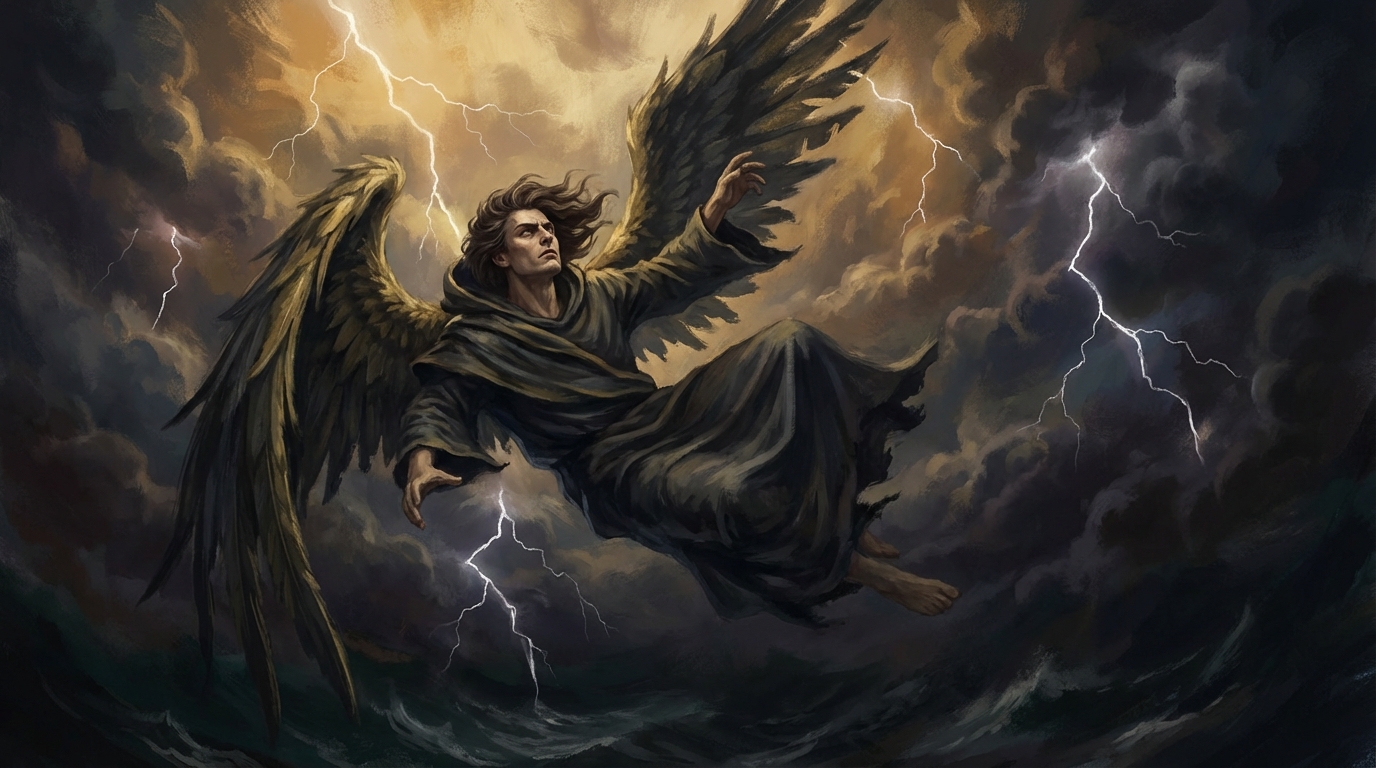
Lucifer
The Morning Star
Isaiah 14:12
How you are fallen from heaven, O Day Star, son of Dawn! How you are cut down to the ground, you who laid the nations low!
— Isaiah 14:12 (ESV)Ezekiel 28:14–15
You were an anointed guardian cherub. I placed you; you were on the holy mountain of God; in the midst of the stones of fire you walked. You were blameless in your ways from the day you were created, till unrighteousness was found in you.
— Ezekiel 28:14–15 (ESV)The name “Lucifer” (Latin: “Light-Bearer”) entered biblical tradition through the Vulgate translation of Isaiah 14:12, where the Hebrew “Helel ben Shachar” — “Shining One, son of the Dawn” — was rendered as “Lucifer.” The passage is formally addressed to the King of Babylon, a taunt-song against a fallen tyrant. Yet the language transcends any earthly king, and early Church Fathers — Origen, Tertullian, Augustine — read in it the fall of a primordial angelic being.
The parallel passage in Ezekiel 28, addressed to the King of Tyre, deepens the picture: an “anointed guardian cherub” who walked among the stones of fire on God’s holy mountain, blameless until iniquity was found in him. Whether these passages describe a literal angelic fall or use cosmic imagery for human arrogance is one of the oldest interpretive debates in biblical scholarship.
What is undeniable is the theological power of the archetype: a being of surpassing beauty and brilliance, placed in the highest position of honor, who falls through pride. “I will ascend above the heights of the clouds; I will make myself like the Most High” (Isaiah 14:14). The Morning Star becomes the cautionary tale of every being — human or angelic — who mistakes proximity to God for equality with God.
Further Reading
- Isaiah 14:12–17
- Ezekiel 28:12–19
- Luke 10:18
- Revelation 12:7–9
- 2 Peter 2:4
- Jude 1:6