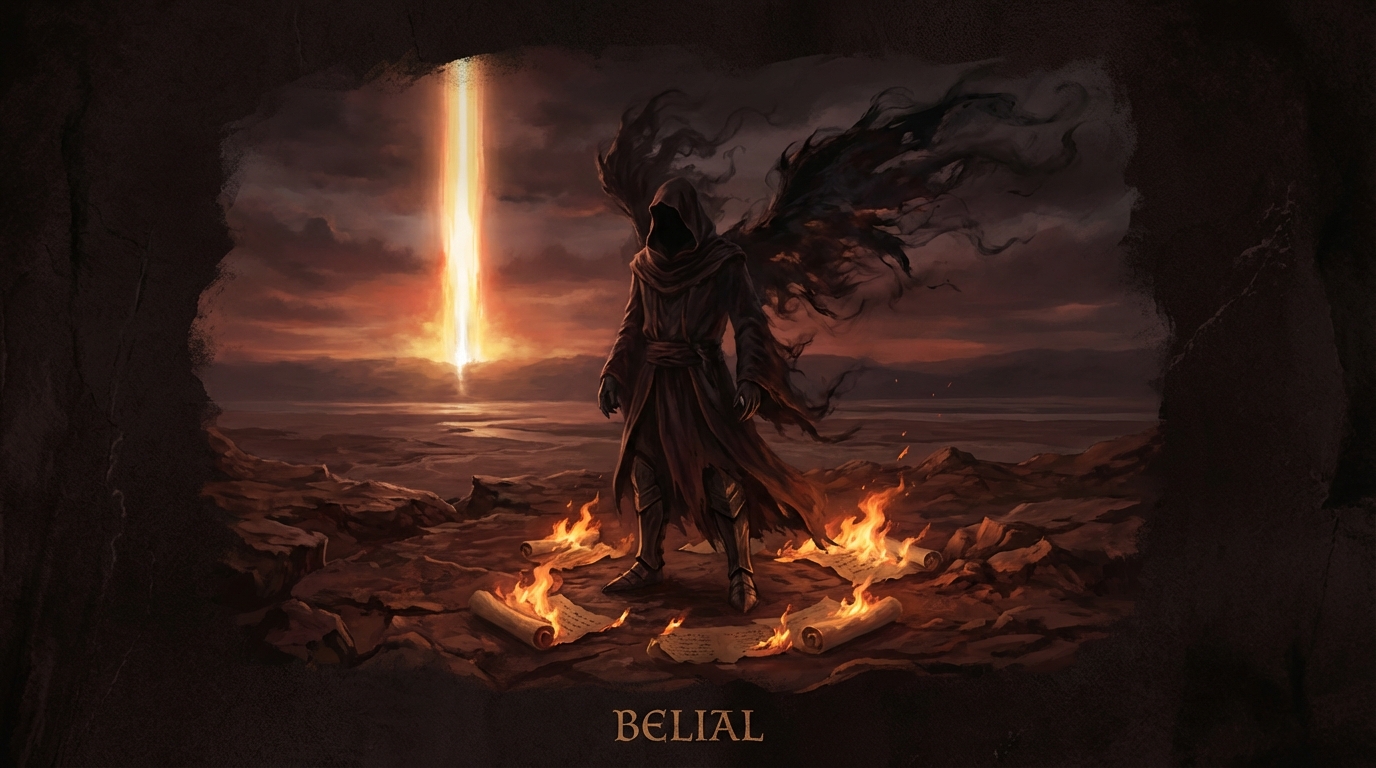
Belial
The Angel of Darkness
2 Corinthians 6:15
What accord has Christ with Belial? Or what portion does a believer share with an unbeliever?
— 2 Corinthians 6:15 (ESV)Community Rule (1QS 3:20–21)
In the hand of the Prince of Light is dominion over all sons of righteousness... and in the hand of the Angel of Darkness is all dominion over the sons of deceit.
— Community Rule 1QS 3:20–21 (Dead Sea Scrolls)Belial (Hebrew: “Worthlessness” or “Without worth”) is the primary adversary figure in the theology of the Dead Sea Scrolls, where he functions as the leader of the forces of darkness in a cosmic dualistic struggle against God and the angels of light.
In the Community Rule (1QS), the Qumran community described the world as divided between two spiritual powers: the Prince of Light (identified with Michael) and the Angel of Darkness (Belial). Every human soul was believed to have a portion in both realms, and the struggle between light and darkness played out both cosmically and within each individual. The War Scroll (1QM) envisions a final eschatological battle in which the Sons of Light, led by Michael, will defeat the Sons of Darkness under Belial.
In the Hebrew Bible, “belial” appears as a common noun meaning wickedness or worthlessness (“sons of Belial” in Judges and Samuel). By the intertestamental period, it had evolved into a proper name for a specific demonic figure. Paul’s use in 2 Corinthians — the only New Testament occurrence — treats Belial as a direct antithesis to Christ, suggesting the name had become a recognized title for the chief of evil spirits.
Further Reading
- 2 Corinthians 6:14–15
- Community Rule (1QS) 1:16–18
- 1QS 3:13–4:26
- War Scroll (1QM) 1:1–15
- 1QM 13:1–6