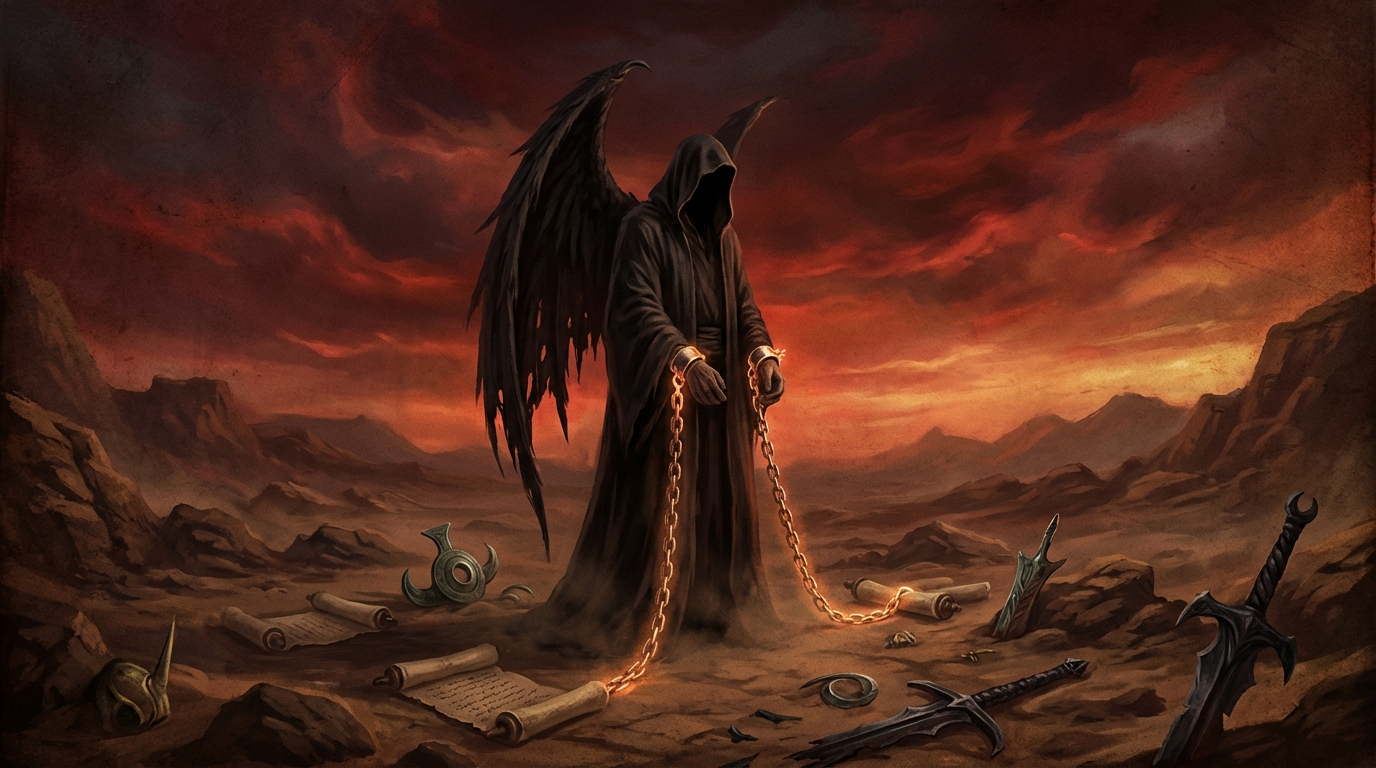
Azazel
The Scapegoat & the Fallen Teacher
1 Enoch 8:1–2
And Azazel taught men to make swords, and knives, and shields, and breastplates, and taught them about metals of the earth and the art of working them... and the use of antimony and the beautifying of the eyelids.
— 1 Enoch 8:1–2Leviticus 16:10
But the goat on which the lot fell for Azazel shall be presented alive before the Lord to make atonement over it, that it may be sent away into the wilderness to Azazel.
— Leviticus 16:10 (ESV)Azazel occupies a unique space in biblical tradition, appearing in both canonical Scripture and apocalyptic literature. In Leviticus 16, the Day of Atonement ritual involves two goats — one sacrificed to the Lord, and one sent into the wilderness “to Azazel.” Whether this originally referred to a place, a demon, or a concept of removal is debated, but the connection to a fallen spiritual being became firmly established in later Jewish tradition.
In 1 Enoch, Azazel is one of the leaders of the Watchers — the angels who descended to earth and corrupted humanity. His specific crime was teaching forbidden knowledge: the forging of weapons, the art of warfare, and the cosmetic arts. For this, the archangel Raphael is commanded to bind Azazel hand and foot, cast him into darkness in the desert of Dudael, and cover him with rocks until the day of judgment.
Azazel represents one of the most enduring theological themes in Scripture: the danger of knowledge without wisdom, power without restraint. He is the angel who gave humanity the tools of its own destruction, and who bears the sins of the world into the wilderness.
Further Reading
- Leviticus 16:8–10
- Leviticus 16:20–22
- 1 Enoch 8:1–3
- 1 Enoch 10:4–8
- 1 Enoch 13:1–2